

Views: 0 Author: Site Editor Publish Time: 2026-08-31 Origin: Site


Warped, bowed, and stressed steel plates destroy fabrication margins. Common defects like bends, waves, and twists directly cause poor weld fit-up. Rejected parts multiply quickly. Grinding and rework time skyrockets. Fabrication shops constantly face a difficult tension. They absolutely need flat, stress-relieved steel to maintain quality. However, fully automated or CNC-controlled leveling lines require massive capital expenditure. Low-volume or custom fabrication shops simply cannot justify that level of investment.
The manual leveling machine offers a highly effective, cost-efficient compromise for specific operational profiles. It bridges the gap between raw material inconsistency and the need for precision fabrication. This guide provides a technical framework for evaluating machine specifications. You will learn how to match roll diameters to material thickness, evaluate structural rigidity, and calculate true operational returns.
Application Match: A hand operated plate leveler for small batches is optimal for low-to-medium throughput environments where operator skill can offset the need for automated precision. It serves as a traditional, cost-effective solution for basic sheet metal flattening, straightening, and stress correction.
Roll Sizing is Critical: Selecting between a 60mm, 80mm, or 100mm roll manual leveling machine dictates the minimum and maximum steel thickness you can effectively process without risking machine deflection.
Hidden Costs: While upfront costs are low, buyers must account for the operator learning curve, manual adjustment times, and physical labor requirements in their operational calculations.
Downstream Value: The primary ROI of manual leveling comes from boosting overall shop productivity, reducing scrap rates, and significantly accelerating downstream welding and assembly times.

A manual plate leveler operates on fundamental metallurgical principles. The machine utilizes a series of offset upper and lower rollers. These rollers apply alternating bending forces to the steel plate as it passes through the machine. The goal is to push the steel past its yield point. This action stretches the material fibers, relieves internal stress, and ultimately achieves a flat surface. The material enters the machine with a specific defect and exits neutralized.
The manual designation refers directly to the adjustment mechanism. Operators use mechanical hand-wheels to set the roll gap and adjust the tilt of the upper roll bank. These machines lack Programmable Logic Controllers (PLCs). They do not have digital memory to store specific material profiles or automated recipes. Every adjustment requires physical input from the operator based on the specific condition of the incoming steel.
This equipment represents the most traditional solution for basic sheet metal flattening. It excels in environments where micron-level, automated precision is not strictly required. Custom fabrication shops, repair facilities, and low-volume manufacturers rely on these machines. They provide a reliable method to correct severe deformations before cutting or welding processes begin. You feed the plate, read the output, adjust the hand-wheels, and run it again until the material lays flat on the inspection table.
Evaluating throughput reveals the most significant operational difference. Automated levelers feature one-touch setups. The operator inputs the material thickness and yield strength, and the machine calibrates instantly. Manual hand-crank adjustments take considerably longer. The operator must physically turn the wheels, measure the gap, run a test piece, and readjust. This setup time impacts overall daily throughput, especially when processing highly variable material batches.
Precision and consistency also differ greatly. Automated systems offer repeatable accuracy across thousands of parts. Manual machines rely heavily on operator feel. Correcting specific defects like edge waves or center buckles requires trial-and-error. An experienced operator must read the material, adjust the roll tilt to apply more pressure to specific areas, and visually inspect the results. Consistency depends entirely on the skill level of the person turning the hand-wheels.
Capital allocation drives most purchasing decisions in this category. Automated leveling lines require substantial upfront investment. Manual machines demand a fraction of that initial capital. However, buyers must weigh this lower entry barrier against ongoing labor requirements. Manual operation demands more physical effort and longer setup times. Shops must evaluate their specific production mix to determine if the lower initial investment justifies the higher manual labor input.
Feature | Manual Leveling Machine | Automated Leveling Line |
|---|---|---|
Setup Time | 5 to 15 minutes per new material batch | Under 30 seconds via touchscreen |
Operator Skill Required | High (Requires understanding of metallurgy and defect reading) | Low (Machine calculates required roll penetration) |
Initial Capital Investment | Low | Extremely High |
Best Application | Low-volume, high-mix custom fabrication | High-volume, continuous production stamping |
Material yield strength dictates the required machine rigidity. Mild Steel A36 behaves very differently than High-Strength Low-Alloy (HSLA) steel or AR400 wear plate. Higher yield strengths require significantly more force to stretch the material fibers past their elastic limit. A machine built to flatten 6mm mild steel will likely fail to flatten 6mm HSLA steel. The frame will deflect, and the rolls will bend under the increased load.
Buyers often fall into a common trap. They purchase a machine based solely on its maximum thickness capacity. They ignore the material hardness factor. This oversight leads to stalled motors, damaged bearings, and warped machine frames. Always calculate the required leveling force based on the specific yield strength of your toughest material. De-rate the maximum thickness capacity if you plan to process high-strength alloys.
Identify the specific defects the machine must handle. Steel plates suffer from various deformations. Severe bends result from improper handling. Cross-bow occurs when the material curves across its width. Coil set waves form when steel retains the memory of being rolled into a coil. Ensure the machine provides sufficient adjustment capabilities. The upper roll bank must tilt enough to aggressively work the material at the entry point and gently flatten it at the exit.
The number of leveling rolls directly determines the quality of stress relief. Standard machines typically feature anywhere from 7 to 21 rolls. A higher roll count equals better flatness. More rolls subject the material to more alternating bending cycles. Each cycle progressively reduces the internal stress. A 7-roll machine might correct a simple bend. A 19-roll machine will effectively eliminate complex coil set waves and cross-bows.
Roll pitch refers to the exact distance between the centers of adjacent rolls. This measurement dictates the machine's ability to handle specific gauge ranges. A tight roll pitch is necessary to effectively yield thin materials. If the pitch is too wide, thin sheet metal will simply ride over the rolls without bending. Conversely, a wide roll pitch provides the mechanical leverage needed to bend thick, heavy plates.
A heavy-duty frame is non-negotiable. Leveling generates immense separating forces. The steel plate constantly tries to push the upper and lower rolls apart. A weak frame will stretch or twist under this load. Look for stress-relieved cast iron or heavily ribbed welded steel frames. The frame must absorb these forces without transferring any deflection to the work rolls.
Backup rollers, also known as support flights, sit directly behind the main work rolls. Their sole purpose is to prevent the work rolls from deflecting under heavy loads. If a work roll bends even slightly, the machine cannot maintain consistent flatness across the width of the plate. Backup rollers provide the necessary structural support to keep the work rolls perfectly straight during operation.
When inspecting a machine for frame rigidity, follow these specific evaluation steps:
Measure the thickness of the side frames using calipers to ensure they meet the manufacturer's stated specifications.
Inspect the welding joints on the main frame for continuous, heavy-duty penetration rather than spot or stitch welds.
Count the number of backup roller flights supporting the main work rolls. Wider machines require more flights to prevent center deflection.
Check the mounting blocks for the backup rollers to confirm they are bolted directly to a rigid structural cross-member.
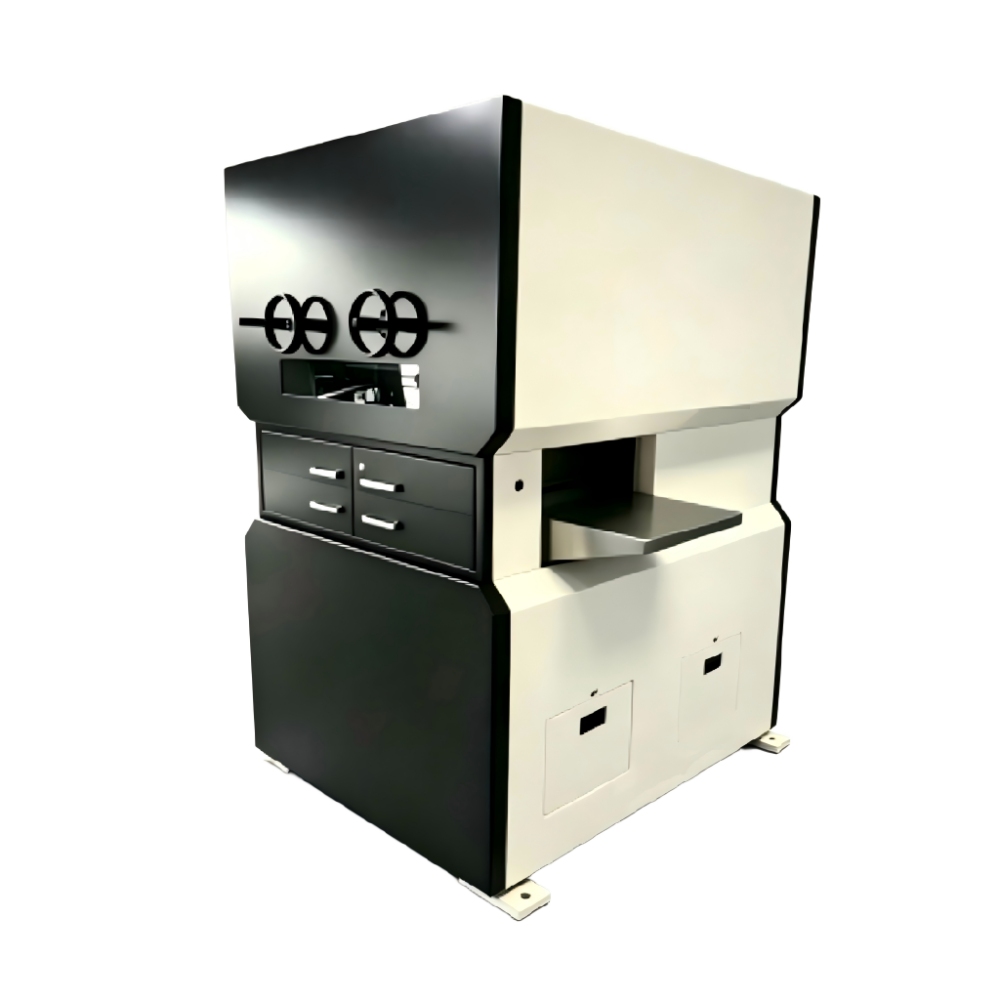
The 60mm roll manual leveling machine targets thin-gauge sheet metal applications. It typically processes materials ranging from 1mm to 3mm in thickness. This size is highly common in HVAC fabrication, light enclosure manufacturing, and precision sheet metal shops.
Performance characteristics revolve around the tight roll pitch. The smaller 60mm diameter allows the rolls to sit closer together. This proximity effectively yields thinner materials without causing surface marring. Larger rolls would fail to correct minor surface waves in 1mm steel. The 60mm configuration provides the precise bending moment required for delicate, thin-gauge stress relief.
Operators running 60mm machines must exercise caution with the hand-wheel adjustments. Thin gauge material reacts aggressively to minor gap changes. Over-penetrating the entry rolls can easily stretch the center of the sheet too far, creating a permanent center buckle that cannot be reversed. Small, incremental adjustments yield the best results on thin stock.
The 80mm roll manual leveling machine serves as the versatile mid-range standard. It generally handles steel plates between 3mm and 6mm thick. This machine fits perfectly into general fabrication shops that process a wide variety of structural components.
This configuration balances capability with finesse. It handles moderate plate thickness easily. Yet, it avoids over-working or damaging slightly thinner materials. The 80mm rolls provide enough structural integrity to resist deflection under standard loads. It represents the best all-around choice for shops looking to improve precision on standard brackets, base plates, and structural gussets.
When processing 6mm plate on an 80mm machine, the operator will notice increased resistance on the hand-wheels. The mechanical advantage of the adjustment screws must overcome the yield strength of thicker steel. Proper lubrication of the adjustment threads becomes a daily requirement to prevent galling and ensure smooth operation.

The 100mm roll manual leveling machine is built strictly for heavy-duty applications. It optimally processes thick plates ranging from 6mm to 10mm. Depending on the plate width and material yield strength, it can sometimes handle even thicker stock.
Performance at this level requires massive structural rigidity. The machine relies on robust backup bearings to support the large work rolls. Buyers must understand the physical realities of this machine. Manually adjusting the roll gap under these heavy loads requires significant physical effort. The hand-wheels control massive steel blocks. Operators need leverage and strength to dial in the correct settings for 10mm steel plate.
Shops utilizing 100mm machines often process heavy earthmoving equipment parts, thick structural base plates, and heavy-duty flanges. The wide roll pitch provides the necessary leverage to bend thick steel past its yield point. However, this wide pitch means the machine cannot process thin gauge material. A 2mm sheet will simply pass through a 100mm machine without experiencing any bending force.
Roll Diameter | Target Material Thickness | Ideal Shop Application | Roll Pitch Characteristics |
|---|---|---|---|
60mm | 1mm to 3mm | HVAC, Light Enclosures, Precision Sheet Metal | Tight pitch for yielding thin gauges without surface damage. |
80mm | 3mm to 6mm | General Fabrication, Brackets, Structural Gussets | Balanced pitch for versatile mid-range stress relief. |
100mm | 6mm to 10mm+ | Heavy Equipment, Base Plates, Thick Structural Steel | Wide pitch for maximum mechanical leverage on thick plate. |
Manual leveling relies entirely on operator dependency. The machine does not think. The operator must read the material bow before feeding it into the rolls. They must manually adjust the entry and exit roll gaps to achieve the correct wedge shape. The entry gap is typically set tighter than the material thickness to force the yield. The exit gap is set roughly equal to the material thickness to ensure the plate exits flat.
Realistic timelines for operator proficiency vary. Basic operation takes only a few days to understand. However, mastering the process takes time. Operators need weeks of trial and error to build intuition. They must learn how different steel batches react. They must understand how to correct severe edge waves versus center buckles. This hands-on experience maximizes the machine's value.
Reading the plate requires a trained eye. An operator looks down the edge of the steel to identify the defect. If the edges are wavy but the center is flat, the edges are longer than the center. The operator must adjust the machine to stretch the center of the plate to match the edges. This requires adjusting the backup flights to crown the work rolls. Learning this specific mechanical relationship separates a novice from an expert.
Consistent maintenance prevents machine failure. Operators must perform regular lubrication of all universal joints and drive gears. Inspecting the backup bearings ensures they still rotate freely and support the work rolls. Checking roll parallelism is arguably the most critical task. If the upper and lower rolls fall out of parallel alignment, the machine will actually introduce new twists into the material.
Work rolls have a finite lifespan. The constant friction and pressure eventually wear down the hardened surfaces. Depending on usage volume and material scale, rolls will eventually require regrinding. Heavy scale from hot-rolled steel accelerates this wear. Shops must plan for this maintenance cycle. Replacing or regrinding rolls restores the machine to factory precision.
Implement a strict daily and weekly maintenance schedule to protect your investment:
Daily: Blow off all mill scale and debris from the work rolls and backup bearings using compressed air.
Daily: Apply high-pressure grease to all universal joint zerks to prevent drive train binding.
Weekly: Check the parallel alignment of the upper and lower roll banks using a precision dial indicator.
Monthly: Inspect the main drive chain or gear train for proper tension and signs of excessive wear.
Quarterly: Measure the diameter of the work rolls to track wear patterns and schedule regrinding before surface defects occur.
Proper shop floor layout maximizes efficiency. A leveling machine requires significant linear space. You need adequate infeed space to stage the warped plates. You need equal outfeed space to receive the flattened material. Placing the machine in a cramped corner guarantees bottlenecks and safety hazards.
Consider auxiliary material handling equipment. Processing 10mm steel plate requires mechanical assistance. You cannot manually feed heavy plates into the machine. Integrate overhead cranes, jib cranes, or heavy-duty roller tables into the layout. Smooth material flow into and out of the leveler directly impacts your daily production rates.
Calculating the true investment requires a comprehensive framework. Start with the initial purchase price of the machine. Add the freight costs for shipping heavy machinery. Include the installation and rigging expenses. Next, calculate the annual operator hours required to run the machine manually. Multiply those hours by your burdened shop hourly rate. Finally, factor in annual maintenance and lubrication costs. This formula provides a clear picture of the actual operational expense.
Manual machines keep the initial capital expenditure low. This allows smaller shops to acquire leveling capabilities without draining cash reserves. The trade-off is the manual labor required for setup and operation. Shops with low-volume, high-mix production often find this trade-off highly favorable. The labor cost of manual adjustment remains lower than the massive debt service required for an automated line.
Scrap reduction provides immediate financial returns. Warped plates cause severe issues during laser or plasma cutting. The cutting head can crash into bowed material, destroying the consumables and ruining the part. Leveling the material beforehand eliminates these crashes. You produce fewer rejected parts. Calculating the cost of wasted steel and lost cutting time quickly justifies the machine investment.
The welding department experiences massive hidden savings. Flat parts fit together perfectly. Welders spend less time fighting the material. They require less heavy clamping to force warped pieces into alignment. They use fewer tack welds. Most importantly, starting with stress-relieved steel results in significantly less weld distortion after the heat is applied. The final assembly remains dimensionally accurate.
Productivity boosts define the ultimate value. Many shops currently rely on slow, inconsistent manual hammering to flatten parts. Others tie up expensive press-brakes to bump-flatten steel plates. Replacing these inefficient methods with a dedicated leveling machine transforms shop throughput. Parts move faster from the cutting table to the welding bay. Overall fabrication time drops, allowing the shop to take on more jobs.
Take the following actions to integrate a manual leveling machine into your fabrication workflow:
Audit your current scrap rates and welding fit-up times to establish a baseline for measuring future efficiency gains.
Measure the thickness and yield strength of your most commonly processed steel plates to determine the exact roll diameter required.
Request a physical test run from the manufacturer using your own warped material samples to verify the machine's capability.
Map out your shop floor to ensure you have the necessary linear footprint for infeed and outfeed roller tables.
A: The maximum thickness depends entirely on the roll diameter and the material's yield strength. Robust manual units typically cap out around 10mm to 12mm for mild steel. Beyond this thickness, the physical effort required to manually adjust the roll gap becomes impractical, and motorized adjustments become necessary.
A: Operators use mechanical hand-wheels to set the roll gap. The entry gap is adjusted tighter than the material thickness to force the steel past its yield point. The exit gap is set equal to the material thickness. This creates a wedge shape that flattens the plate and corrects bends.
A: Yes. The machine bends the material back and forth past its elastic yield point as it moves through the offset rolls. This aggressive stretching relieves internal manufacturing stresses. Stress correction prevents parts from warping later during laser cutting or heavy welding.
A: The 60mm roll machine features a tighter roll pitch, making it ideal for yielding thinner gauges between 1mm and 3mm without surface damage. The 80mm roll machine offers higher rigidity and a wider pitch, suited for mid-range plates between 3mm and 6mm thick.
A: Basic mechanical operation takes only a few days to learn. However, mastering the feel of the machine takes time. Learning to read different material batches, adjust for varying yield strengths, and correct specific wave defects usually requires several weeks of hands-on experience.

