

Views: 0 Author: Site Editor Publish Time: 2026-08-03 Origin: Site


Minor flatness defects cause severe downstream failures in metal processing. Internal stress warps parts immediately after laser cutting. Uneven surfaces cause robotic welding gaps to exceed acceptable tolerances. Mechanical levelers often fail to correct these issues effectively because they cannot adjust dynamically under varying yield strengths. This limitation leads to inconsistent batches, high scrap rates, and excessive manual setup times. Traditional screw-down mechanisms simply lack the responsiveness required for high-precision manufacturing. You need a reliable intervention point for high-tolerance production. The hydraulic leveling machine solves these exact manufacturing bottlenecks. It provides real-time roll penetration adjustments and neutralizes internal material stress completely. By forcing the metal past its yield point through a series of precise alternating bends, it standardizes production quality. This technology transforms warped, stressed coils into perfectly flat, stress-relieved sheets ready for automated processing.
Hydraulic leveling systems eliminate internal material stress and correct complex distortions (waves, buckles, camber) more consistently than static mechanical systems.
Automated hydraulic adjustments and real-time gap control significantly reduce operator setup time, minimize material waste during changeovers, and increase overall facility productivity.
These machines offer immense versatility, capable of processing a wide range of metals—from standard carbon steel to high-strength alloys—with consistent reliability.
Selecting the correct machine configuration (e.g., 60, 80, or 100 roll capacities/widths) is strictly dependent on the material’s yield strength, thickness range, and required throughput.
Implementation requires evaluating facility footprint, hydraulic maintenance capabilities, and integration requirements with existing coil feeding lines.
Acceptable flatness is no longer a visual estimation made by an operator on the floor. Modern automated manufacturing demands strict numerical tolerances, often requiring flatness within 0.5mm per meter. Robotic welding cells require joint gaps with near-zero variation to maintain arc stability and weld penetration. High-speed fiber laser cutters operate mere millimeters above the material surface. If a sheet springs up during the cutting process due to released internal stress, the laser head crashes. You lose a costly optic assembly and a full shift of production. Precision stamping requires perfectly flat stock to ensure uniform material flow inside the die and prevent premature tool wear.
Distortion physics dictate how metal behaves during processing. Coil winding stretches the outer fibers of the metal and compresses the inner fibers, creating a permanent memory in the material. Thermal cutting introduces localized heat-affected zones that shrink upon cooling, pulling the surrounding metal out of alignment. Stamping creates uneven material flow across complex geometries. These processes introduce severe internal stresses that manifest physically as edge waves, center buckles, or crossbow defects. You cannot simply press these defects flat with a heavy weight. The material will always return to its stressed state unless the internal memory is properly neutralized through plastic deformation.
Processing un-leveled metal carries severe financial penalties. Hard costs accumulate rapidly across the shop floor when operators attempt to force warped material through precision machinery. Consider the immediate impacts on a standard production line:
Jammed machinery halts continuous production lines, causing cascading delays across all downstream departments.
Scrapped parts waste increasingly expensive raw materials, directly reducing the profit margin of the job.
Tool wear accelerates significantly when feeding wavy stock into presses, requiring more frequent die sharpening and replacement.
Rejected final assemblies ruin client relationships and incur heavy rework labor to salvage the project.
Un-leveled materials create massive production bottlenecks. Operators spend hours manually tweaking mechanical straighteners. They run test sheets, measure the output, adjust the screw jacks, and repeat the process. This trial-and-error approach kills productivity. Correcting these distortions accurately on the first pass speeds up overall manufacturing timelines. It eliminates the unpredictable variables that cause costly downstream errors and allows automated cells to run unattended as designed.
Defect Type | Physical Manifestation | Root Cause in Processing | Downstream Manufacturing Impact |
|---|---|---|---|
Coil Set | Longitudinal bowing along the length of the sheet. | Tension from the original coil winding process. | Fails to feed into stamping presses; jams laser shuttle tables. |
Crossbow | Transverse bowing across the width of the sheet. | Uneven cooling at the mill or improper slitting tension. | Causes severe robotic welding misalignment and gap issues. |
Edge Wave | Ripples along the outer edges of the material. | Edges are longer than the center due to rolling mill pressure. | Prevents accurate edge-bending in CNC press brakes. |
Center Buckle | Wavy distortion down the center of the sheet. | Center is longer than the edges due to rolling mill pressure. | Causes oil-canning in architectural panels and appliance faces. |
Dynamic gap control defines the primary advantage of hydraulic systems over older mechanical designs. Hydraulic cylinders manage roll penetration depth in real-time. Linear variable differential transformer (LVDT) sensors detect minute variations in material thickness and hardness across a single sheet. The control system adjusts the hydraulic pressure instantly based on this feedback. This allows the machine to adapt to changing material conditions on the fly. Mechanical systems rely on static screw jacks driven by electric motors. They cannot react to changing material conditions during the run because the mechanical threads bind under heavy load. Hydraulics maintain consistent pressure, ensuring uniform flatness from the leading edge to the trailing edge of the coil.
Material versatility improves dramatically with automated hydraulic adjustments. You can transition between different metals rapidly without losing hours to manual setup. A facility can process mild steel in the morning and high-tensile aluminum in the afternoon. The programmable logic controller (PLC) recalls specific pressure profiles for copper, stainless steel, or advanced high-strength alloys. This adaptability ensures consistent material processing across diverse production runs. Operators do not need to manually recalibrate the entire machine for every new coil; they simply select the material grade and thickness from the touchscreen interface.
Inherent overload protection prevents catastrophic equipment failure. Hydraulic systems are fundamentally safer than mechanical drives. If an oversized sheet, a doubled blank, or a foreign object enters the machine, the system detects the immediate pressure spike. The hydraulic proportional valves instantly release pressure, and the roll frame opens automatically. This protects the leveling rolls, universal joints, and drive train from severe damage. Mechanical systems lack this instantaneous release capability. They often suffer broken drive shafts, shattered universal joints, or stripped gears under similar overload conditions, resulting in weeks of downtime.
Eliminating internal stress requires precise alternating bending. The material must be stretched past its yield point to erase its memory. The first few rolls at the entry of the machine plunge deeply into the material. This forces severe plastic deformation, stretching the metal fibers beyond their elastic limit. It breaks the existing stress memory of the metal. Subsequent rolls gradually reduce the bending radius as the material moves toward the exit. This tapering effect brings the material back to a perfectly flat, neutral state. Hydraulic pressure ensures the exact force required for this plastic deformation is applied consistently, regardless of minor thickness variations in the raw stock.
Selecting the right equipment requires a strict evaluation framework based on hard engineering data. You must establish the exact relationship between your material width, thickness, and yield strength. Higher yield strengths require exponentially more leveling force to achieve plastic deformation. Thicker materials require larger roll diameters to prevent the rolls themselves from deflecting under the load. You must match the machine configuration to your specific production demands to avoid underpowering your line or overspending on unnecessary capacity.
The 60 roll hydraulic leveling machine fits perfectly into mid-range production facilities. It handles standard material widths and moderate thicknesses effectively, typically ranging from 0.5mm to 3.0mm in mild steel. This configuration is ideal for general sheet metal fabrication, HVAC component manufacturing, and standard appliance panels. It balances processing capability with a manageable physical footprint, allowing it to fit into existing shop layouts without massive foundation modifications.
Performance metrics for this class focus on efficiency and ease of use. You can expect high throughput speeds for standard gauges, keeping downstream laser cutters and punch presses fully fed. Setup times drop significantly compared to manual straighteners. The machine reduces manual operator intervention, allowing staff to focus on material handling and quality inspection rather than constant machine tweaking. It provides excellent precision for materials with standard yield strengths up to 350 MPa.
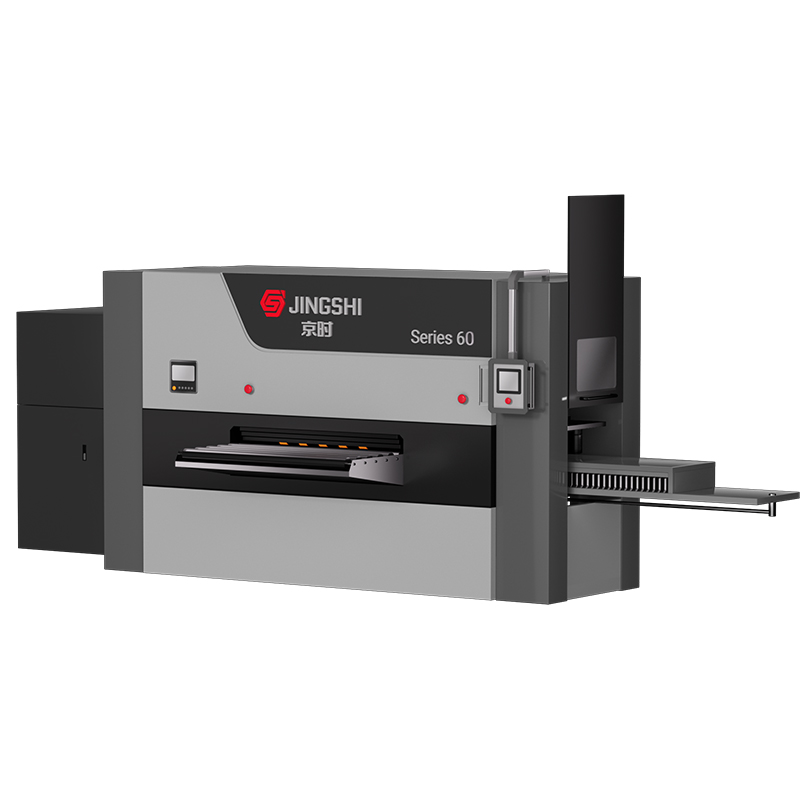
Transitioning to an 80 roll hydraulic leveling machine makes sense for wider material processing or when handling higher-tensile materials. Advanced high-strength steels (AHSS) and thick stainless steel require greater structural rigidity from the leveling frame. The increased roll count and heavier frame design provide the necessary force to yield these tougher materials without machine deflection. This machine typically handles thicknesses from 1.0mm up to 6.0mm, depending on the material's tensile properties.
This configuration supports high-mix, medium-volume manufacturing environments. It offers enhanced versatility for processing various metals within the same shift. The operational advantages include a wider processing window and the ability to handle materials with yield strengths exceeding 600 MPa. You achieve a perfect balance between heavy-duty processing capacity and fine-tuned precision. It handles the demands of modern contract manufacturing, where material specifications change daily based on client orders.

Investing in a 100 roll hydraulic leveling machine targets maximum-width coil processing and extreme material conditions. High-throughput steel service centers rely on this equipment class to process master coils before distribution. Specialized aerospace and automotive applications demand the extreme precision it provides for high-tensile alloys. It handles the widest, toughest coils on the market, often processing materials with yield strengths approaching 1000 MPa.

Structural prerequisites for this machine are significant. You must provide a reinforced concrete foundation to support the massive tonnage and dynamic loads generated during operation. The power requirements are substantial to drive the heavy-duty hydraulic pumps and large electric drive motors. Extreme durability defines this machine class. It is engineered for continuous, round-the-clock operation in the most demanding industrial environments, featuring oversized bearings, heavy-duty universal joints, and massive hydraulic cylinders.
Machine Configuration | Target Material Thickness | Typical Yield Strength Capacity | Ideal Production Environment |
|---|---|---|---|
60 Roll Series | 0.5mm - 3.0mm | Up to 350 MPa (Mild Steel / Aluminum) | General Fabrication, HVAC, Appliances |
80 Roll Series | 1.0mm - 6.0mm | Up to 600 MPa (High-Strength Steel / Stainless) | Contract Manufacturing, Automotive Parts |
100 Roll Series | 2.0mm - 12.0mm+ | Up to 1000 MPa (Advanced High-Strength Alloys) | Steel Service Centers, Heavy Stamping |
Leveling heavy plate steel presents a unique physics challenge that standard equipment cannot solve. Processing plates from 10mm to 50mm thick requires immense force to achieve plastic deformation. Standard sheet levelers fail completely here because they suffer from insufficient frame rigidity. The primary work rolls deflect under the massive resistance of thick steel. This deflection causes the center of the plate to remain wavy while the edges stretch further, worsening the material's condition. You need specialized heavy-duty architecture to overcome the resistance of thick plate steel.
The engineering behind a hydraulic flattening machine for thick metal sheets is robust and uncompromising. It requires significantly larger roll diameters to withstand the bending forces without snapping or bowing. The roll spacing must be wider to accommodate the thickness of the plate and allow for the necessary bending radius. Massive hydraulic cylinder tonnage is mandatory. These cylinders must force the thick plate past its yield point while the machine frame remains completely rigid. The side frames are often cut from solid steel plate rather than welded assemblies to prevent any flexing under maximum load.
Back-up roll configurations are critical for thick plate processing. Multi-row back-up rollers sit directly behind the primary work rolls. They provide rigid support across the entire width of the machine. When extreme hydraulic pressure is applied to a 30mm steel plate, these back-up rolls prevent the primary rolls from bowing upward in the center. This mechanical support ensures uniform flatness across the entire plate width, eliminating center buckles and edge waves in heavy gauge materials. The back-up flights are often adjustable, allowing operators to fine-tune the pressure distribution across the width of the plate for specific defect correction.
Automation and control systems dictate daily productivity on the shop floor. Modern leveling machines integrate advanced CNC and PLC systems that remove the guesswork from the leveling process. Memory storage for material profiles allows operators to simply select a saved recipe for a specific material batch. The machine automatically sets the hydraulic gaps, roll penetration depths, and feed speeds. This reduces reliance on tribal operator knowledge and ensures consistent results regardless of who is running the shift. It speeds up changeovers from hours to minutes and increases overall facility productivity.
Durability directly impacts the machine lifespan and your return on investment. You must assess the construction quality of the main frame before purchasing. Frame rigidity ensures consistent performance; if the frame flexes under load, the leveling quality degrades immediately. Look for heavily ribbed, stress-relieved welded steel frames or solid plate construction. Component durability, especially the universal joints, gearboxes, and drive shafts, ensures long-term reliability in demanding industrial environments. Undersized drive components will shear under the torque required to level high-yield materials.
Maintenance accessibility influences long-term operational expenses and machine uptime. Design features must facilitate quick servicing to keep the line running. Quick-change roll cassettes allow operators to slide out the entire roll assembly for cleaning, inspection, or replacement without dismantling the machine frame. Automated lubrication systems ensure all critical bearings receive exact grease volumes continuously, preventing premature bearing failure. Hydraulic fluid filtration monitoring prevents microscopic contamination from destroying sensitive servo valves. These features keep the machine running and prevent unexpected downtime.
Energy efficiency must be weighed against tonnage requirements. Hydraulic pumps require high electrical power to generate massive leveling forces. However, this energy consumption is offset by downstream savings. You save energy by eliminating scrap parts that would otherwise require re-melting or disposal. You save energy by processing materials faster on the first pass without running them through the machine multiple times. The overall energy footprint of the facility often decreases because downstream machines, like lasers and press brakes, run without interruption or material-related faults.
Facility integration requires careful physical planning and engineering oversight. Heavy-duty models demand reinforced concrete foundations to handle the static weight and dynamic vibrations. You may need to excavate pits to accommodate the machine base, install vibration isolation pads, and use high-strength epoxy grout to level the base plates. Footprint allocation must include space for in-feed and out-feed tables, as well as safety fencing. If integrating with existing uncoilers or shear lines, you must ensure the pass-line height matches perfectly. Loop pits may be required to synchronize the continuous feed of the uncoiler with the stop-and-go action of a downstream stamping press.
The operator skill curve shifts significantly when upgrading equipment. Transitioning from mechanical hand-wheels to servo-hydraulic touchscreens requires structured training. Operators must understand how to read hydraulic pressure curves and interpret LVDT sensor feedback. They need to navigate digital control interfaces confidently. While the machine automates the heavy lifting and gap setting, operators must still understand the underlying principles of plastic deformation to troubleshoot complex material defects. Manufacturers should provide on-site training during commissioning to bridge this knowledge gap.
Hydraulic system maintenance requires strict protocols to ensure longevity. You must prevent fluid contamination at all costs. Dirt or metal shavings in the hydraulic oil will destroy proportional valves rapidly, leading to erratic roll behavior. Fluid temperature management is critical; overheated oil loses viscosity, which degrades leveling precision and damages pump seals. Implement regular seal inspections to prevent pressure leaks. Schedule routine oil analysis to monitor fluid health, check for particulate matter, and replace 3-micron filters before they enter bypass mode.
Transitioning to a hydraulic leveling machine is a necessary evolution for serious metal processors. Facilities facing strict flatness tolerances cannot rely on outdated mechanical straighteners that bind under load and require constant manual adjustment. High scrap rates and slow production cycles destroy profitability in modern manufacturing. Hydraulic systems provide the precision, power, and adaptability required to neutralize internal stress and deliver perfectly flat materials consistently, regardless of the material grade or operator experience level.
Shortlisting the right equipment relies on clear logic and accurate production data. Define your maximum material yield strength first, as this dictates the required tonnage. Determine your required width and thickness range to select the correct roll diameter and spacing. Evaluate the necessity for automated gap control based on your batch changeover frequency. Match these parameters to the appropriate machine class to ensure optimal performance without over-investing in unnecessary capacity.
Take the following actionable steps to move forward with your equipment evaluation:
Audit your current scrap rates and identify the exact percentage caused by material distortion and internal stress.
Send a sample of your most problematic high-yield material to the manufacturer for a physical leveling test and dimensional report.
Measure your available floor space and verify your concrete slab thickness against the machine's foundation requirements.
Calculate the required hydraulic pump amperage and confirm your facility's electrical drop can handle the load.
A: A mechanical leveling machine uses static screw jacks to set roll gaps, which cannot adjust during operation. A hydraulic leveling machine uses cylinders to manage roll penetration dynamically. Hydraulics adapt to material thickness variations in real-time, provide overload protection, and ensure consistent pressure across the entire sheet.
A: It uses an alternating bending process under high hydraulic pressure. The machine forces the metal past its yield point, causing plastic deformation. This deep bending breaks the material's internal stress memory. Subsequent rolls gradually reduce the bend radius, returning the sheet to a perfectly flat, stress-free state.
A: These machines are highly versatile. They process standard mild carbon steel, aluminum, copper, and stainless steel. Heavy-duty models are specifically designed to handle advanced high-strength steels (AHSS) and high-tensile aerospace alloys, adapting easily via automated pressure profile adjustments.
A: Materials generally exceeding 10mm in thickness require specialized heavy-duty flattening machines. Standard levelers lack the frame rigidity and roll diameter to process plates up to 50mm thick. Specialized machines use massive hydraulic tonnage and multi-row back-up rollers to prevent deflection.
A: Automated adjustments eliminate manual trial-and-error setups. Operators select a pre-saved material profile from the PLC memory. The machine instantly sets the correct roll gaps and hydraulic pressures. This reduces changeover times from hours to minutes, keeping downstream processes fed continuously.
A: Standard maintenance focuses on fluid health. You must monitor hydraulic oil temperatures to maintain viscosity. Regular filter changes are mandatory to prevent valve contamination. Routine inspections of hydraulic seals prevent pressure leaks, and automated lubrication systems must be kept full to protect moving components.

